Adaptation explores and seeks both concrete and speculative solutions for the future through a dialogue between art, science and tacit local knowledge. Adaptation asks, through artistic, social, scientific, human and non-human activities, how flexibility and adaptation to inevitable change change the perspectives and strategies adopted. The project aims to increase cultural and social well-being and offer new perspectives for perceiving change and identifying the future – resilience: increasing flexibility and tolerance, and innovative solutions emerging from art and culture.
Michèle Boulogne (b.1996, Martinique) is an artist living and working in the Netherlands, working in the field of textile art. At the Sodankylä Geophysical Observatory, Boulogne continues her work linked to space, force fields and their phenomena alongside identity and cultural memory. Since 2024, Michele has been an active member of the Venus Conversations collective, which brings together the fields of culture, science and art. Venus Conversations is a project that will continue until 2034, creating dialogue and artistic productions around the planet Venus. The artist’s previous work Venus does not exist (2021) focuses on making visible the planet Venus, which has remained mysterious, by considering how technology shapes our collective image of inaccessible landscapes and technical data. Boulogne’s works combine various textile techniques such as weaving, dyeing and knitting in a collage format. He draws inspiration for his work from Caribbean heritage and space exploration, and uses them to explore fragmented history, overlapping temporalities, and great natural forces.
Glasgow-based artist Elina Bry works with lens-based art and performance. In her residency at Kulttuurikauppila, Bry explores the relationship between humans and nature in our time of climate anxiety and climate change. The final result, found in the exhibition Adaptation, addresses the topic through moving images, sound and performance. Bry also aims to bring the voices and feelings of local people about nature to a larger audience. As half-Finnish, Bry has a strong relationship with Finnish nature, which she has also addressed in her previous work Is The Earth Chronically Ill? (2023-2024). Elina Bry has previously held residencies in, among others, the UK, Australia and Vietnam.
Jaakko Myyri (b. 1991, Oulu) is a Dutch-based artist whose work focuses on the intersections of identity and environment. Myyri works primarily with sculptures and code. He explores how language functions as a force for responding to the decay of systems – moving beyond technological critique towards alternative ways of building tools and subject formation. Myyri uses machine learning and decommissioned equipment, such as industrial air conditioners, in his works, which he uses to create sculptures and immersive installations. During his residency at the Oulanka Research Station, Myyri is working on a work in which emotional states are transformed into atmospheres, utilizing research data from the sensitive subarctic region. He graduated from the Gerrit Rietveld Academie in 2018 and his works have been shown in solo and group exhibitions at places such as LINZ FMR (AT), NEVERNEVERLAND (NL), PuntWG (NL), Het Nieuwe Instituut (NL), Uncut at the Stedelijk Museum (NL) and Noblesse Collection (KR).
Matti Aikio is a Sámi artist with a background in reindeer herding. His work explores the intersections of modern Western societies and Indigenous worldviews, particularly in their spatial and temporal perceptions. Aikio is especially interested in the conflict over natural resources, which stems from fundamentally different relationships to nature between Indigenous peoples and dominant societies. His practice combines moving image, sound, text, and photography. He has addressed themes such as the Sámi truth and reconciliation process, cultural appropriation, and Sámi self-determination. In the Adaptation exhibition, Aikio examines the use of modern technologies in Indigenous livelihoods. He graduated from the Academy of Contemporary Art in Tromsø in 2012. His work has been exhibited at the Sápmi Triennale (Norway, 2024), Helsinki Biennial (Finland, 2023), Västernorrlands Museum (Sweden, 2023), and the Barents Spektakel festival (Norway, 2021).
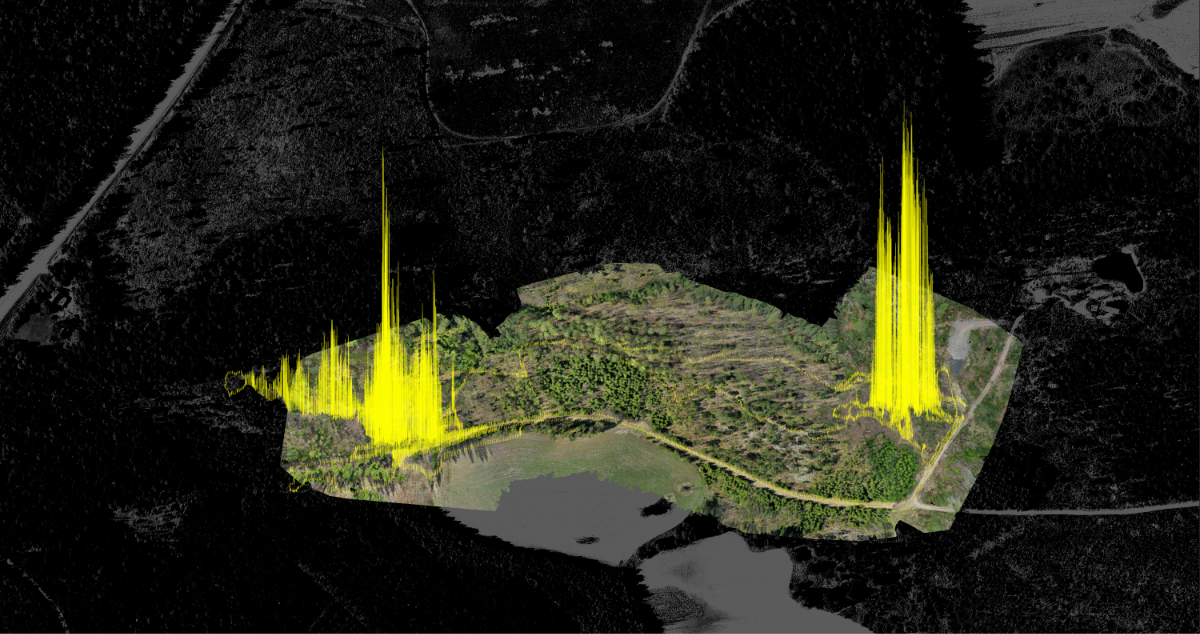
Erich Berger is an artist, curator, and doctoral researcher based in Helsinki, conducting interdisciplinary research at the University of Oulu. His dissertation explores how artists approach temporality beyond the human timescale, integrating anthropology, geology, and art. Throughout his career, Berger has investigated the materiality of knowledge and the intersection of science, technology, and art. His current focus lies in deep time and hybrid ecologies, working with geological and radiogenic processes while examining their socio-political implications. In the Adaptation exhibition, Berger presents his ongoing work “Spectral Landscapes” (2021–), which explores these themes. His work has been widely exhibited at museums, galleries, and major media art events such as Ars Electronica (Austria, 2009), File Festival (Brazil, 2010), Sonar (Spain, 2008), and the Venice Biennale (Italy, 2007).
Arttu Nieminen (b. 1981) is a media artist from Rovaniemi whose work often begins with formal play—symmetry, horizon lines—and expands into Arctic fragility and prophetic imagery. Flowing nature footage, poetic narration, and minimalist soundscapes collide with brutal montage in Nieminen’s distinctive audiovisual language. His video art has been exhibited in museums, galleries, cinemas, and also in public projections and events. Nieminen is completing his MA at the University of Lapland. His works have been shown at Rovaniemi Art Museum (2025), Kiasma (2022), the Venice Biennale (2022), and the Mänttä Art Festival (2019).
Hans Pieski (b. 1981) is a filmmaker from Utsjoki who lives with his family along the Teno River, approximately 500 kilometers north of the Arctic Circle. His Sámi ancestors have inhabited the region since time immemorial, and the traditional knowledge regarding the Teno River’s vast waterway system, which is passed down through generations, forms a central foundation for his work. Pieski creates captivating and distinctive visual narratives in which Indigenous culture, Arctic nature, and contemporary phenomena converge with surreal undertones. In his experimental and documentary works, Pieski explores Arctic nature across the seasons as well as the impacts of climate change in Sápmi. Pieski’s works have been screened at the Skábmagovat Film Festival (2025) and in the domestic competition at the Tampere Film Festival (2024 and 2025). His 360-degree films have been featured as part of the international ÁRRAN 360° project at the Venice Biennale (2022) and in the program for Bodø’s European Capital of Culture year (2024).
Maija Tammi is a Finnish artist and Doctor of Arts whose photo and video works investigate boundaries between mortality and immortality, science and art. Known for her radical storytelling, Tammi employs a playful approach—what she calls speculative poetry—to address central societal issues and anxieties. In the Adaptation exhibition, she revisits her work “Milky Way” (2015), which explores intersections between the cosmos, Greek mythology, and human existence. Prior to her artistic career, Tammi worked as a photojournalist. She earned her doctorate from Aalto University in 2017. Her works have been exhibited internationally in Paris (2020, 2021), Berlin (2018), Rome (2017), London (2017, 2018), New York (2015, 2016), and Tokyo (2017), and she has published five books.